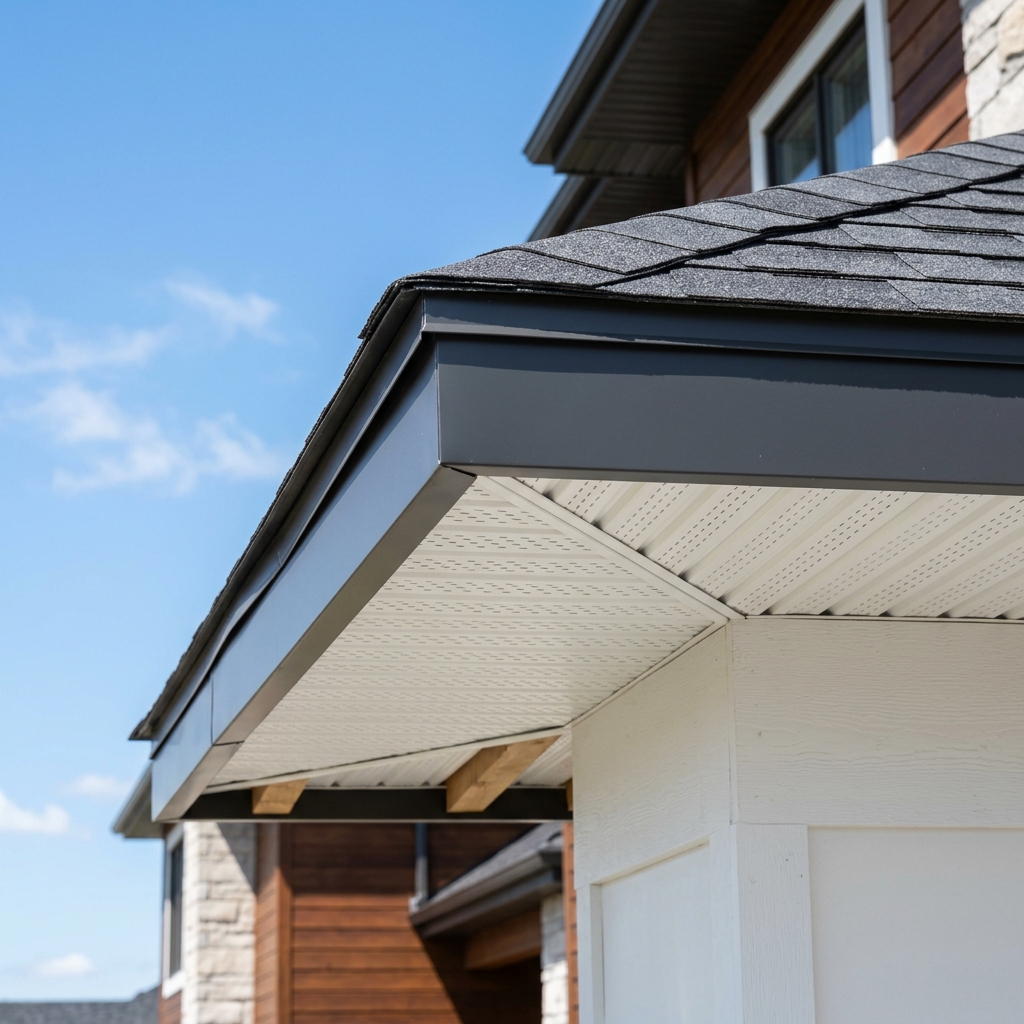
Homeowners often view gutters simply as channels to catch rainwater. However, gutters are actually part of a larger structural protection system that includes the **fascia board** and **soffit panels** running along your roofline.
When gutters are clogged with leaves, oak tassels, and twigs, rainwater pools and overflows. This water runs backward, soaking into raw wooden boards. Left unresolved, this constant moisture leads to structural wood decay and wood rot.
Understanding Soffit & Fascia Systems
To understand why blocked gutters are so destructive, you need to understand how the edge of your roof is constructed:
- The Fascia Board: This is the vertical wooden trim piece running along the edge of your roof trusses. Your gutters are mounted directly to the fascia. It acts as the structural support carrying the weight of the gutter system.
- The Soffit: This is the horizontal panel underneath the roof overhang that bridges the gap between your fascia board and home siding. Vented soffits draw fresh air into your attic space to reduce heat and moisture.
- Rafter Tails: These are the structural ends of your roof rafters that extend outward. The fascia board is nailed directly into the ends of these rafter tails.
The Progression of Wood Rot Damage
When gutters clog and overflow, water runs backward behind the gutter, soaking into raw wooden boards. Because this area is tucked away under shingles, it stays dark and damp—ideal conditions for wood-rotting fungi to thrive.
The damage progress follows a predictable pattern:
- Flaking Paint & Staining: The first signs of rot are peeling paint, dark water stains, and green algae growing along the wood trim.
- Soft Wood Fibers: As fungi eat through the wood cells, boards become soft and spongy. Screws holding the gutter hangers lose their grip, causing gutters to sag and pull away.
- Attic Rot & Mold: The rot spreads from the fascia into the rafter tails. Moisture leaks into the attic, soaking drywall ceilings, ruining insulation, and creating mold.
- Pest Infestation: Rotted wood is soft and easy for pests to tunnel through. Squirrels, birds, and hornets chew through decaying soffits to nest in attics, leading to expensive pest removal bills.
The Solution: Eradication and Custom Aluminum Wrapping
If you find wood rot along your roofline, do not just screw new gutters back onto the soft wood. The structural decay will continue to spread, and the new gutters will pull loose during the first heavy snowstorm.
Tri-State Gutter Masters LLC resolves this with a comprehensive three-step approach:
- 1. Structural Replacement: We cut out all rotted wood sections and replace them with solid pine or cedar framing. We also reinforce any decayed rafter tails.
- 2. Custom Trim wrapping: We wrap the new wood in custom-formed heavy-duty aluminum coils. This shields the wood under a weather-tight skin that never needs painting.
- 3. Micro-Mesh Gutter Protection: We install stainless steel micro-mesh guards to keep gutters clear. This prevents water from pooling and overflowing backward, protecting the roofline.
Protect Your Roofline Trim
Blocked gutters are more than an eyesore—they are a structural threat. Regular inspections and early intervention can save you thousands of dollars in attic restorations and structural carpentry repairs.
If you notice sagging gutter channels, peeling paint, or damp soffits, contact Derek Agnew today to schedule a physical roofline audit and quote.
Noticed Damp Trim or saggy brackets?
Do not wait for wood rot to spread into your attic framing. Let Derek Agnew provide an honest, physical carpentry inspection and repair quote.